A Parent’s Story: How a Developmental Screening Opened the Door to Speech Support
Livingston County Family Success Story
A Parent's Story: How a Developmental Screening Opened the Door to Speech Support
Sometimes, the most important part of a developmental screening is the conversation that follows. One Livingston County parent recently shared how asking a question about her young son's speech led to timely support, practical ideas, and a caring partnership for the whole family.
“I Still Had Concerns About His Speech”
Over the summer, a Livingston County parent completed an Ages & Stages Questionnaire (ASQ) for her son. His screening scores did not indicate a concern, but she still had questions about his speech development.
She shared those concerns, and someone followed up with her within a day. Her son was evaluated the following week and was found eligible for speech services.
Her experience highlights an important message: parents and caregivers know their children best. A screening is a helpful starting point, not a diagnosis or a substitute for listening to a family's concerns.
Support That Fits Into Everyday Family Life
The family began receiving in-home visits from a speech professional about twice a month. During visits, the provider demonstrated playful, low-pressure ways to encourage communication, shared resources, and worked with the parent on goals to practice between visits.
The parent appreciated receiving written updates and having someone to answer questions as her child learned new skills. She also received individualized ideas to support her son's sensory and everyday routines.
About three months after beginning services, the parent reported meaningful progress in her son's communication — and growing confidence in how to support him at home.
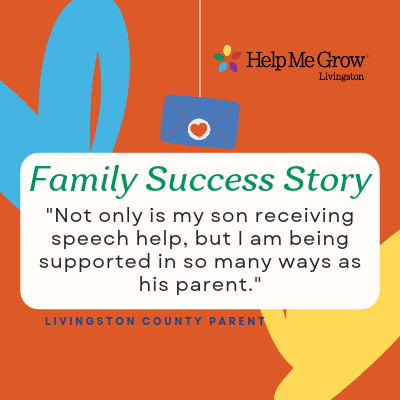
“Not only is my son receiving speech help, but I am being supported in so many ways as his parent.” — Livingston County parent, shared anonymously with permission
Why This Story Matters
This family's experience is about more than one screening or one referral. It shows what can happen when a parent's observations are taken seriously and local partners help a family connect with the right support.
Through Help Me Grow Livingston , families can ask questions about development, access screening opportunities, and get help finding resources and services. Great Start Livingston also creates opportunities for families to connect with each other and with community partners.
Every child's path is different. A screening does not guarantee eligibility for services, and the supports available depend on a child's needs and the programs involved. But families do not have to wait for a screening score to raise a concern or ask for guidance.
Your Family Belongs Here. Connect With Us!
Whether you have a developmental question, want to meet other families, or have an idea that could make Livingston County more supportive for young children, we want to hear from you.
Here are four ways to get started:
1. Come to a Free Playdate
Join other families with young children for play, learning, and connection. Explore our upcoming playdates and family activities.
Explore Upcoming Playdates2. Complete a Free ASQ
Learn more about your child's development through a parent-completed Ages & Stages Questionnaire. You can share questions even when a screening looks typical.
Start an ASQ Screening3. Make an Inquiry
Looking for developmental information, early childhood services, or another family resource? Tell Help Me Grow what you're looking for.
Connect With Help Me Grow4. Tell Us What Your Family Needs
What is working for your family? What is missing? Share your ideas, questions, or barriers so we can better understand what Livingston County families need.
Share Your Needs or Ideas