
Disability Pride Month: Why It Matters—and Why You Should Care
By Kasey Hilton, Development Associate / Advocate, Arc Livingston
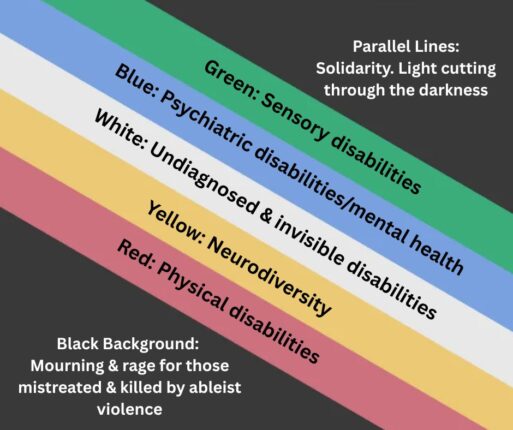
Every July, Disability Pride Month invites us to celebrate—and reckon with—the presence, power, and potential of the largest minority group in the world: the disability community.
As a disability advocate, former educator, and mother to a child with a disability, I’ve lived this movement from every angle. I’ve taught the kids. I’ve sat in the IEP meetings. I’ve been beside hospital beds. I’ve fought for my son’s right to be seen—not as a burden, but as the brilliant, brave, joyful human he is.
My son was diagnosed with Spina Bifida before birth. At just 23 weeks gestation, he underwent spinal surgery—while still inside me. From that moment forward, I became a parent of a child with a disability not by plan, but by fierce and urgent purpose.
And what I’ve learned since is this:
Disability isn’t rare and it isn’t someone else’s issue. It’s part of the human experience.
One in four adults in the U.S. has a disability. One in five children has special healthcare needs. In Livingston County, one in seven children receive special education services. The disability community is the only minority group that anyone can join—at any time, for any reason.
Unfortunately we still live in a world that continues to see disability as an inconvenience—something to accommodate if it’s easy, ignore if it’s hard. My family has felt that firsthand. We’ve cried in shoe stores because light-up sneakers don’t fit over braces. We’ve had to plan family events and activities around surgeries and therapy appointments. We’ve fought insurance companies because his medical equipment isn’t deemed “necessary”. We’ve heard, again and again, that our child is too complicated.
But the problem isn’t our children or any adults with disabilities for that matter.
The problem is a society that was never built for them or with them in mind in the first place.
July 26th marks the 35th anniversary of the Americans with Disabilities Act (ADA)—a law passed not out of kindness, but because disabled activists occupied federal buildings, slept on floors with no air conditioning or working elevators, and refused to be invisible. The ADA was progress—but it was only the beginning.
Today, that progress is under attack.
We’re watching programs like Medicaid and Medicare—lifelines for millions—face threats of devastating cuts. We’re hearing calls to eliminate the Department of Education, a move that would strip away the few protections families like mine still cling to. And we’re still seeing IDEA—the law that promises a free and appropriate education for disabled students—go unfunded, 50 years after it was passed. Yes, you read that correctly. In the past 50 years Special Education through IDEA has never once been fully funded by Congress; even when it was promised to fund 40% of the cost.
This is not a broken system. It’s a system working exactly as designed—to exclude. And we will not go back.
Because Disability Pride is not about inspiration. It’s about inclusion and action. It’s about asking better questions:
- Who is missing from this room?
- Does every child feel safe, welcome, and supported?
- Are we building communities where ramps lead to something worth reaching?
- Who should be at the table that has FIRST HAND experience and can share how to make things better?
- Are we truly listening when those with disabilities share with us their lived experiences?
Making the world accessible doesn’t just benefit people with disabilities—it makes life better for all of us.
Captions help deaf people—and the person watching a video on mute.
Curb cuts serve wheelchairs—and strollers, suitcases, and delivery carts.
Inclusive playgrounds aren’t just fair—they’re statistically used more and are fun for everyone.
So if you’re wondering why Disability Pride Month should matter to you—this is why:
Because disabled people deserve not just access, but belonging.
Because this is your community, too.
Because inclusion isn’t a favor. It’s a right.
Because if we are truly wanting better for our community, we should think about how we can make it better for others now; not just when we’re personally affected.
My son isn’t a burden. He isn’t broken. He’s not someone to pity or fix. He’s curious. He’s funny. He’s brave. He’s compassionate. And he belongs.
Disability Pride Month may end in July, but disabilities don’t; so celebrate all year long by learning about the disability community! Read or listen to a book written by a person who is disabled, our local libraries have displays you can check out. Watch a documentary or movie that features a character with a disability. There is so much that you can do to learn about this incredible community of humans.
This July, I invite you to see Disability Pride Month not as a celebration for some of us, but as a call for all of us.
Click here for a book list that’s constantly growing from young readers to adults!
Here are movies and documentaries that would be great to watch as a family.
- Crip Camp
- Camp Alec
- CODA
- Deaf President Now
- Change not Charity
- Out of My Mind
- The Unbreakable Boy
- Finding Nemo
- Ian: A Moving Story
- Life, Animated
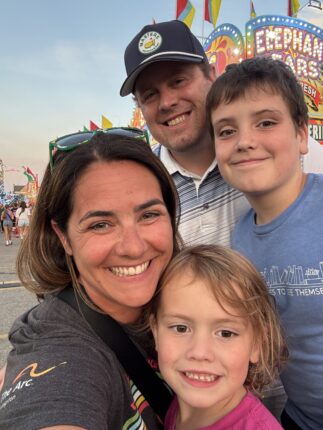
Kasey Hilton is a former educator and currently works at The Arc Livingston. She lives in Livingston County with her husband and two sons, and has her first children’s book coming out this fall that walks children through having to go through surgery. You can find her disability inclusive work on Instagram @almostsavedbythebell.
If you’re interested in knowing more about The Arc Livingston or getting connected in the work done there, please follow us on Facebook or Instagram and check out the website www.arclivingston.org for more information.