Intimate Partner Violence and Maternal Health in Michigan
Intimate Partner Violence and Maternal Health: What Michigan Families Should Know
Every parent deserves to feel safe, supported, and respected—before, during, and after pregnancy.
Pregnancy and the months following childbirth are important times for both maternal and infant health. While families often focus on prenatal appointments, nutrition, and preparing for a new baby, another important factor deserves attention: safety within relationships.
The Michigan Department of Health and Human Services (MDHHS) has published a fact sheet highlighting the connection between intimate partner violence (IPV), maternal health, and pregnancy-related deaths.
For families in Livingston County, understanding these risks—and knowing where to turn for support—is an important part of building a healthy start for children.
LACASA Center provides domestic violence support in Livingston County. Visit LACASA Center or contact the National Domestic Violence Hotline at 800-799-7233.
You do not have to wait for an emergency to ask about your options.
What Is Intimate Partner Violence?
Intimate partner violence, often called IPV, is abuse or controlling behavior by a current or former romantic partner.
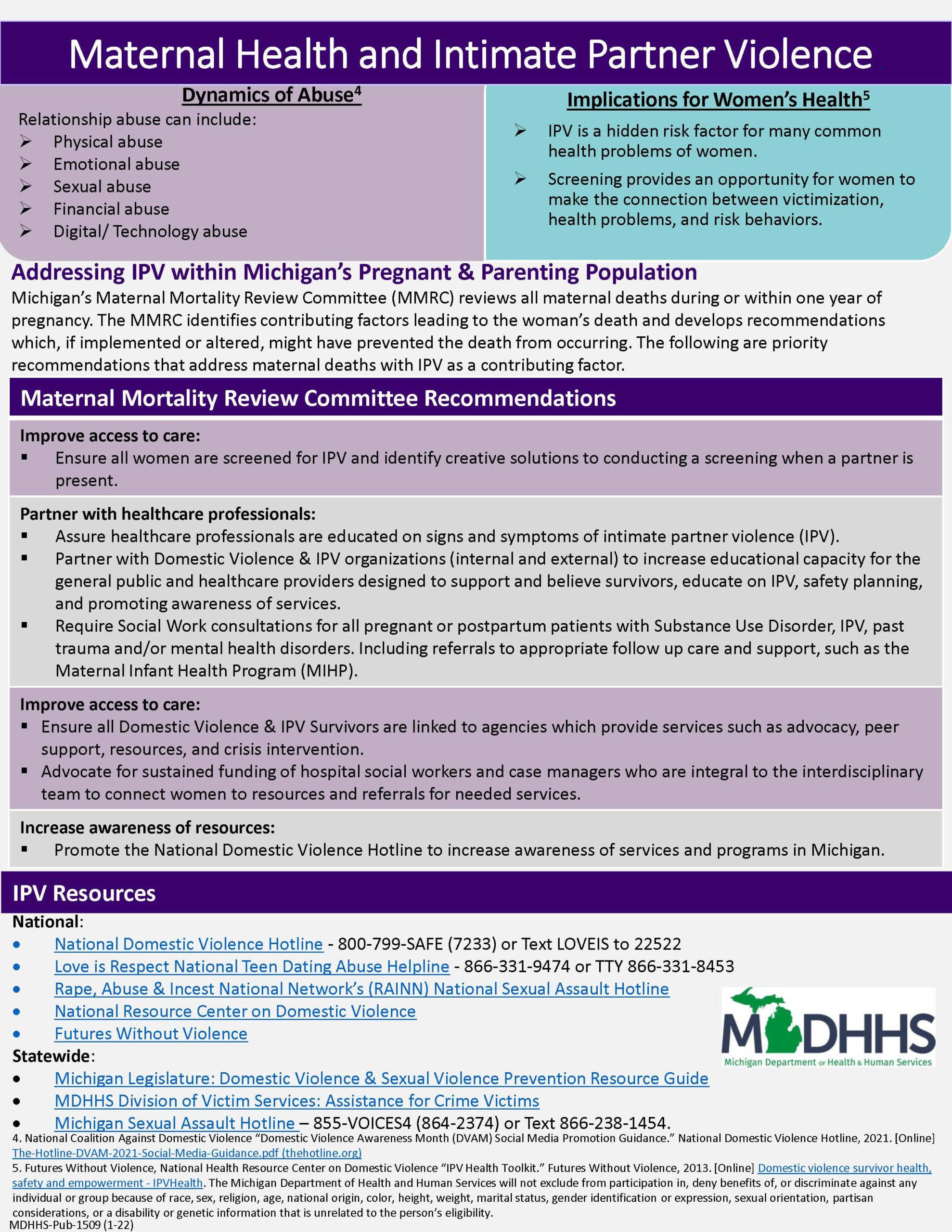
Abuse does not always involve physical violence. It can take many forms:
- Physical abuse: Hitting, pushing, restraining, or causing physical harm.
- Emotional abuse: Threats, intimidation, humiliation, or manipulation.
- Sexual abuse: Unwanted sexual contact or sexual coercion.
- Financial abuse: Controlling access to money, employment, or resources.
- Digital abuse: Using technology to monitor, threaten, or control someone.
Some forms of abuse can be difficult to recognize, especially when controlling behaviors develop gradually. No one deserves to experience abuse, and support is available.
What Michigan Data Tells Us About Violence During Pregnancy
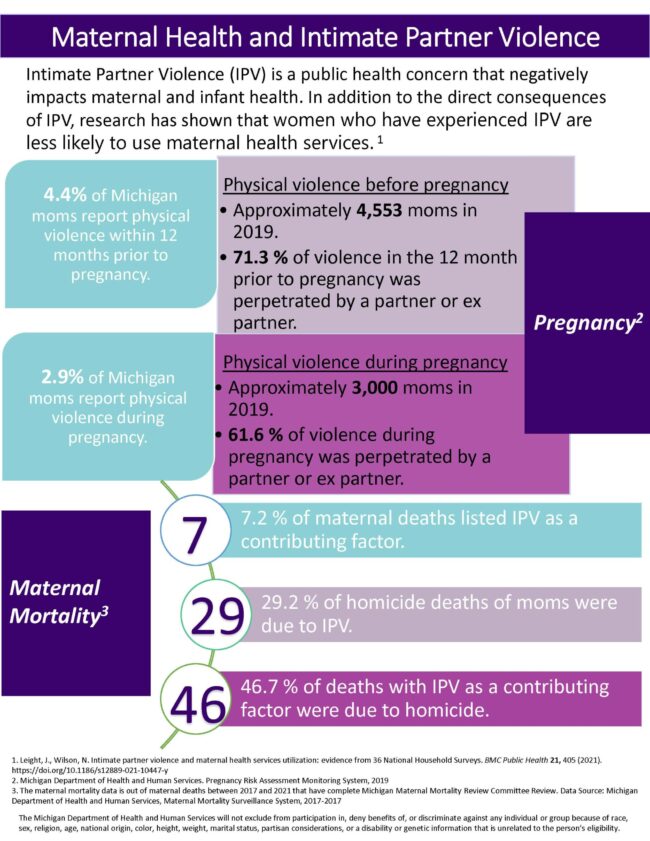
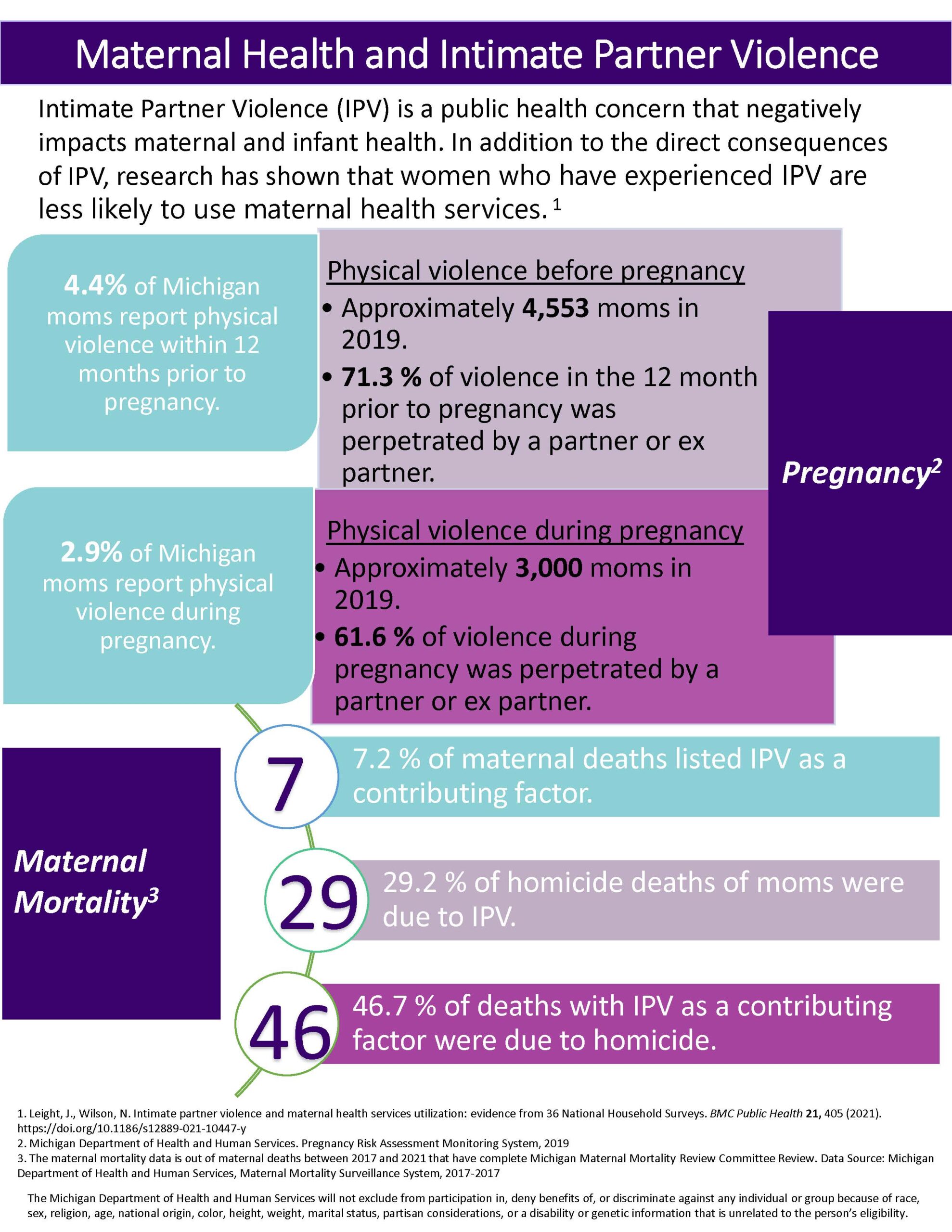
According to the MDHHS fact sheet, Michigan's 2019 Pregnancy Risk Assessment Monitoring System found:
of Michigan mothers reported physical violence during the 12 months before pregnancy—approximately 4,553 mothers in 2019.
of Michigan mothers reported physical violence during pregnancy—approximately 3,000 mothers in 2019.
of reported physical violence before pregnancy was perpetrated by a current or former partner.
of reported physical violence during pregnancy was perpetrated by a current or former partner.
These are historical statewide Michigan findings from 2019, not current Livingston County-specific estimates.
The Connection Between Intimate Partner Violence and Maternal Mortality
Michigan's Maternal Mortality Review Committee examines maternal deaths and identifies factors that may have contributed to those deaths.
The MDHHS fact sheet reports that:
- 7.2% of reviewed maternal deaths identified IPV as a contributing factor.
- 29.2% of maternal homicide deaths were attributed to IPV.
- 46.7% of maternal deaths involving IPV as a contributing factor were due to homicide.
These findings demonstrate why intimate partner violence is an important maternal health concern. The consequences can extend beyond immediate injuries. Research cited by MDHHS also indicates that women who experience IPV are less likely to use maternal health services.
View the Michigan Maternal Health Fact Sheet
View the Full MDHHS Fact Sheet (PDF)
Why Family Safety Matters for Babies and Young Children
A healthy start for children includes more than medical care and early learning opportunities. It also includes safe, stable, and nurturing relationships.
Exposure to violence and ongoing stress within the home can affect young children's emotional well-being, sense of safety, and development.
Families experiencing IPV may need support with health care, housing, transportation, basic needs, parenting, or social connections.
Every child benefits from safe, nurturing relationships, and every caregiver deserves access to support without judgment.
What Health Care Providers and Communities Can Do
Michigan's Maternal Mortality Review Committee recommends improving how communities recognize and respond to IPV, including:
- Screening for IPV in health care settings with attention to privacy and safety.
- Training health care professionals to recognize signs of abuse.
- Building partnerships with domestic violence organizations.
- Connecting survivors with advocacy, peer support, safety planning, and crisis services.
- Supporting social workers and care coordinators who help families access services.
- Increasing awareness of available resources.
These recommendations reinforce the importance of coordinated systems of support. No single organization can meet every family's needs, but strong community partnerships can make finding help easier.
Finding Support in Livingston County
If you or someone you care about is experiencing abuse, confidential resources are available. You can reach out to learn about options without having to make an immediate decision about your relationship.
LACASA Center
LACASA Center serves Livingston County and supports individuals and families affected by domestic violence, sexual assault, and child abuse.
Website: lacasacenter.org
National Domestic Violence Hotline
Confidential support, information, and safety planning.
Call: 800-799-SAFE (7233)
Text: START to 88788
Website: thehotline.org
Michigan Sexual Assault Hotline
Help Me Grow Livingston
Help Me Grow Livingston helps families with young children find information about development, parenting, health, and community resources.
Help Me Grow is not a domestic violence crisis service, but can help families navigate early childhood supports.
Building a Community Where Families Feel Safe and Supported
At Great Start Livingston and Help Me Grow Livingston, we recognize that children's well-being is connected to the health and safety of their caregivers.
Supporting maternal health, strengthening relationships, and connecting families with community resources are important parts of building a strong early childhood system.
Every family deserves to know that help is available and that they do not have to navigate difficult circumstances alone.
Connect With Help Me Grow LivingstonMichigan Department of Health and Human Services, Maternal Health and Intimate Partner Violence, MDHHS-Pub-1509 (January 2022). Pregnancy prevalence findings are from the 2019 Pregnancy Risk Assessment Monitoring System. Maternal mortality findings are from Michigan's Maternal Mortality Review Committee; the original publication contains inconsistent dates in its mortality source note.